“If I then, your Lord and Master, have washed your feet; ye also ought to wash one another's feet.”John 13:14 (KJV)
A towel and a basin
John 13 tells how Jesus, knowing His time had come, rose from supper, took a towel and washed His disciples' feet, a servant's job. Then He said: “If I then, your Lord and Master, have washed your feet; ye also ought to wash one another's feet. For I have given you an example, that ye should do as I have done to you” (John 13:14–15).
Foot washing is a lesson in humility. It prepares our hearts, mends relationships, and reminds us that following Jesus means serving one another.
Bread and cup
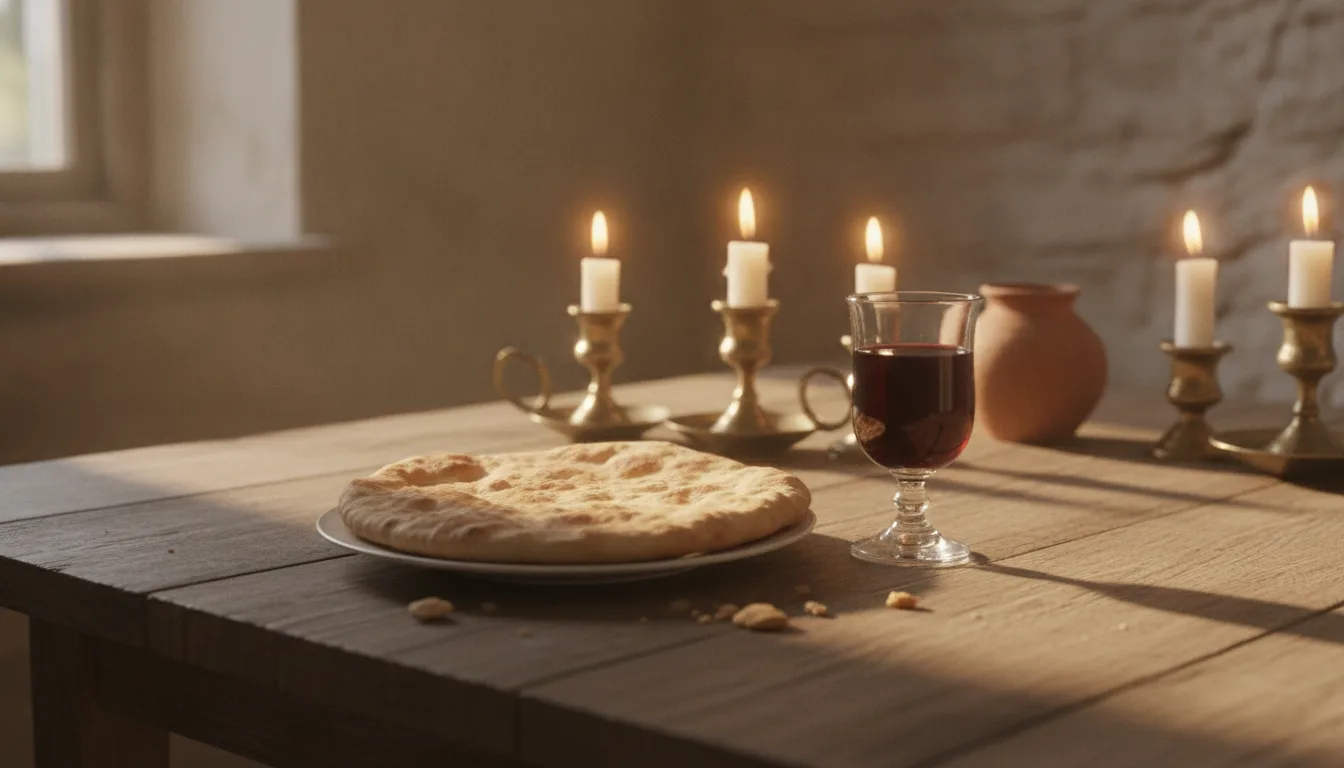
During the Passover meal, Jesus took bread, blessed it and broke it: “Take, eat; this is my body.” Then He took the cup: “this is my blood of the new testament, which is shed for many for the remission of sins” (Matthew 26:26–28). Paul adds Jesus' words, “this do in remembrance of me” (1 Corinthians 11:24).
Since it was Passover, the bread was unleavened. In the Bible, leaven often pictures sin (1 Corinthians 5:7–8), and the “fruit of the vine” (Matthew 26:29) was pure, unfermented grape juice. Both symbols point to the sinless Saviour.
A memorial and a promise
The Lord's Supper looks back and looks forward. It remembers Christ's death, and it anticipates His return: “ye do shew the Lord's death till he come” (1 Corinthians 11:26). It does not itself forgive sins. Forgiveness comes through Christ alone. It is a sacred moment for baptized believers to renew their commitment after examining their hearts (1 Corinthians 11:28).
Questions for reflection
- Why do you think Peter first refused to let Jesus wash his feet (John 13:6–10)?
- What lesson about leadership does foot washing teach?
- What do the bread and the cup represent?
- Why does Paul say the Supper points both back to the cross and forward to Jesus' return?